
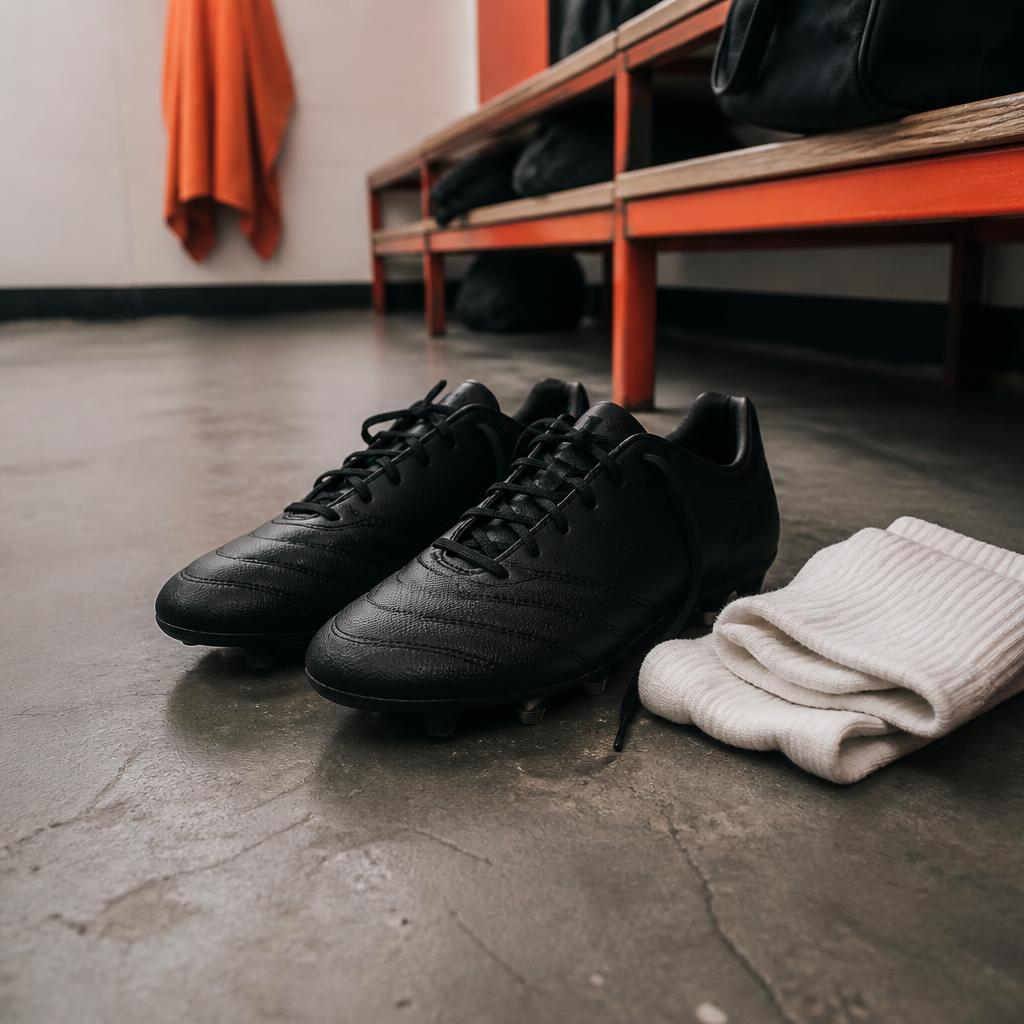
Fit is not a number on a size chart. It is what happens when the player walks, plants, turns and wears the cleat long enough to notice pressure.
01 / Know what secure feels like
A well-fitting cleat holds the heel in place without crushing it and keeps the foot from sliding forward during a stop. The laces or closure should secure the midfoot without creating a sharp pressure line. The player should be able to flex the foot and move the toes naturally. Secure does not mean tight everywhere, and loose does not become safe just because there is extra room.
Put both cleats on and stand before judging. One foot is often slightly larger, and the longer foot deserves the deciding measurement. Wear the soccer socks the player actually uses. If a brace, insole or other permitted insert is part of the player's routine, include it in the try-on rather than adding it later.
02 / Leave useful toe room
Young players need a little space at the front of the shoe, but a large gap allows the foot to move and can create friction. The toes should not be pressed against the end when the player stands or stops. Have the player walk downhill or make a gentle lunge indoors to notice whether the foot slides forward.
Sizing varies between brands, models and foot shapes, so a printed size is only a starting point. Compare the player's longer foot with the brand's own guide, then test the actual shoe. Avoid buying dramatically large footwear as a growth strategy. An unstable cleat can affect confidence and comfort during every session before the foot grows into it.
03 / Test more than a mirror
A useful try-on includes walking, jogging, a controlled stop, a small change of direction and a few touches if the store or return policy allows. Ask the player to describe pressure in plain language: rubbing, pinching, sliding, numbness, or simply unfamiliar. Those details are more actionable than a quick statement that the color looks good.
Keep feet dry and check for immediate hot spots. A mild new-material sensation is different from a sharp seam, heel lift or pressure that changes the player's stride. If the player starts compensating by curling the toes or avoiding a movement, try another shape. Return terms matter because indoor testing may be required to keep footwear eligible for return.
04 / Fit changes with the season
Feet grow, socks change and a cleat can soften or wear differently over time. Check fit before a new season and after a noticeable change in comfort. A player who complains only after long practices may be revealing an endurance problem, not a fit that passes a five-minute test. Parents can ask where discomfort appears and inspect the shoe for worn lining or a damaged upper.
Do not use pain as a break-in plan. If a shoe continues to create blisters, numbness or pressure after a sensible indoor try-on, stop using it and ask a qualified professional for help when needed. Foot shape, prior injury and orthotic needs may require more individualized advice than a general buying guide can provide.
05 / Use the return window wisely
A return window is most useful when the player and parent know what they are checking. Read the terms before removing tags or taking the cleats outside. At home, use the soccer socks, stand on both feet, walk, squat, jog in place and make gentle stops on a clean floor. Check the toe room again after the foot has warmed up. A second try-on often reveals that a shoe that felt fine for one minute creates pressure across the instep or lets the heel rise.
Fit is a conversation between body and shoe, not a contest to make a cleat feel as tight as possible. Laces can secure a good shape, but they cannot transform a narrow upper into a wide one or fix a heel counter that does not hold. If the player is distracted by the footwear, believe that information. A modestly priced pair that disappears during play is a stronger starting point than a prestigious pair that needs constant adjustment. The goal is not to remove every sensation; it is to remove the sensations that interfere with movement.
The right fit is secure at the heel, calm around the foot and roomy enough at the toes for movement—not a pair bought large and hoped into comfort.