
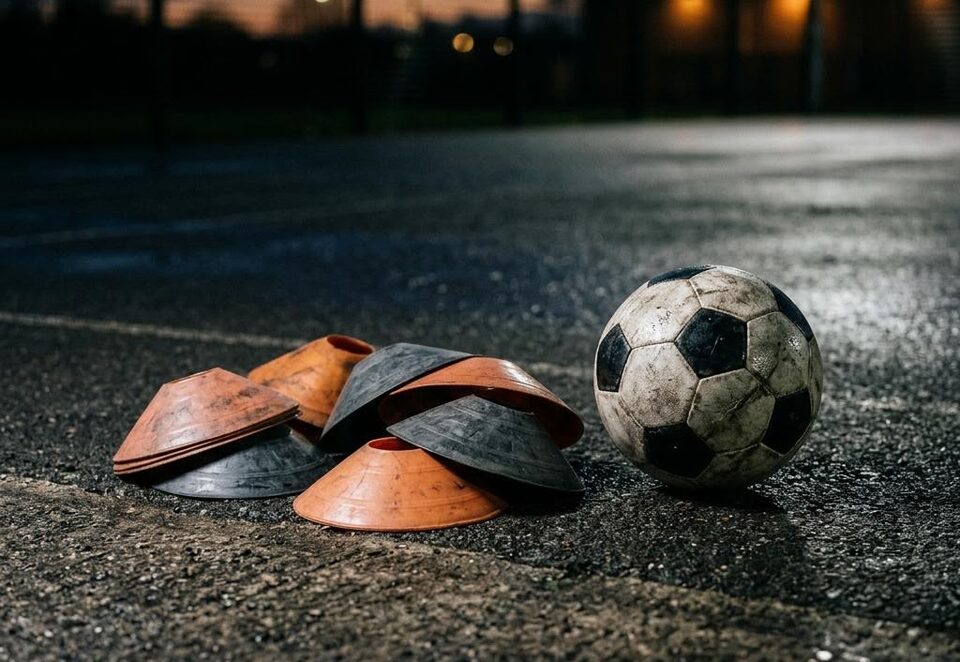
A useful home session needs a place, a purpose and a way to repeat the activity. Choose one skill for today, clear the space and keep the setup simple enough to use again.
Shopping for someone who practices at home? Our 2026 Soccer Christmas Gift Guide includes ideas to compare against their available space and existing equipment. A gift should meet a real need, not add another tool they will not use.
OPEN THE TAKE-ALONG CARDONE SESSION. ONE FOCUS.
Circle a choice on paper or select it here before printing. Use the activity for your space below; keep the pace comfortable and stop or change plans when needed.
YOUR ACTIVITY / FIND YOUR SPACE + SETUP
Carry the ball along a short lane, stop, turn and come back.
Roll or gently pass along the ground; receive toward an open side and return it.
Travel toward a marker, change direction and carry through another gate.
Call a gate; receive a ground pass, turn and carry through it. Swap roles.
Dribble between two gates, stop under control, look up and return.
Pass through a gate, move to a new angle and receive toward the next gate.
BEFORE YOU START
□ Check ground, weather, visibility and local rules. Keep clear of roads, people and breakable property; use suitable footwear and keep water nearby. An adult should supervise younger players.
WHEN YOU FINISH
□ Gather the ball and any markers. Clean and dry them as needed; store everything away from walkways and heat.
No special equipment required beyond a suitable ball and safe space. Follow your coach’s plan if you have one.
01 / Start with what you already have
The low-cost setup is a ball suited to the player, two safe markers such as flat discs or everyday objects placed outside the path of play, and a clear patch of ground. If the family already has a suitable ball, there is no need to buy a rebounder, goal or ladder to begin. Mark a small gate, then choose one task: carry the ball through it, stop, turn and come back. Move the markers only when the task needs more room.
Before adding equipment, ask what problem it solves. A wall might return a pass if using it is permitted and will not damage property. A partner can return passes without any special tool. Save a purchase for a recurring limitation you have actually encountered, and check fit, setup and storage before paying.
02 / Small space: keep the ball close
In a patio, driveway or other compact area, pick a level, non-slippery surface with room to stop without reaching a road, window or doorway. Mark a short lane. Solo: dribble slowly between its ends using both feet, pause with the sole, turn and travel back. Try receiving the ball across the body before the turn rather than simply counting touches. Do not use hard shots in a confined space.
With a partner, stand a comfortable distance apart and roll or gently pass the ball along the ground. The receiver takes a first touch toward an open side of the lane before passing back. If the area is too tight for moving passes, switch to stationary touches or find another location. The activity should fit the space, not force the space to fit the drill.
03 / Backyard: make a decision at each marker
Set two small gates several steps apart on suitable ground, leaving stopping room beyond both ends. Solo: travel toward one gate, change direction at a marker and dribble through the other. Alternate the foot used to turn. A permitted, sturdy wall can add gentle pass-and-receive work, but check the ball's return path and keep clear of people, glass and fences that could be damaged.
With a partner, one person calls a gate as the other receives a ground pass, turns and carries the ball through it. Swap roles after a few turns. This adds a choice without buying more equipment. Skip shooting unless there is a safe backstop and enough open space beyond the target for a missed ball.
04 / Park: use the extra room responsibly
Check local rules and the condition of the ground before laying out a wider lane and two passing gates. Solo: dribble from one gate to the other, stop under control, look up and return at a comfortable pace. Work on the quality of the turn rather than sprinting repeatedly. A goal is optional; the gates themselves can serve as targets for controlled ground passes.
With a partner, pass through one gate, move to a new angle to receive and then aim for the other. Start close enough to keep passes controlled and adjust the distance to suit the player. Keep drills away from paths and other park users, collect every marker and give other families room to share the space.
05 / Make the session easy to repeat
Choose one objective, such as receiving toward space or turning with both feet. Begin with comfortable touches, spend a short block on the task and finish with a few repetitions that include a decision. A player can pause, change the task or stop when tired; this is an optional practice, not another compulsory team session. If a coach has given a specific training plan, use that guidance instead of adding extra workload.
For solo practice, set a clear return point and keep retrieval time manageable. With a partner, trade the roles of passer and receiver so both players get a turn. After the session, ask which part felt useful and which constraint made it frustrating. Change one thing next time—the distance, the gate or the direction—rather than collecting drills and tools.
06 / Check safety, then put everything away
Before each session, inspect the surface for holes, loose gravel, slippery patches and objects that could trip someone. Use footwear appropriate for that surface, keep water available and account for weather and visibility. Maintain a buffer from vehicles, people and fragile property. An adult should choose and supervise a suitable area for younger players; stop if a ball could escape into traffic or someone else's space.
A ball, a few flat markers and a small bag can be packed away quickly. Dry and clean the ball and markers according to their care instructions, then store them out of walkways and away from heat. If considering a larger rebounder or portable goal later, first work out where it will live, how it will be secured and who can set it up safely. If storage is awkward, a simpler practice may be the better routine.
Start with a ball, a safe space and one specific task. Adapt the lane for the place and the player, use a partner when available, and add equipment only when a real practice need calls for it.