
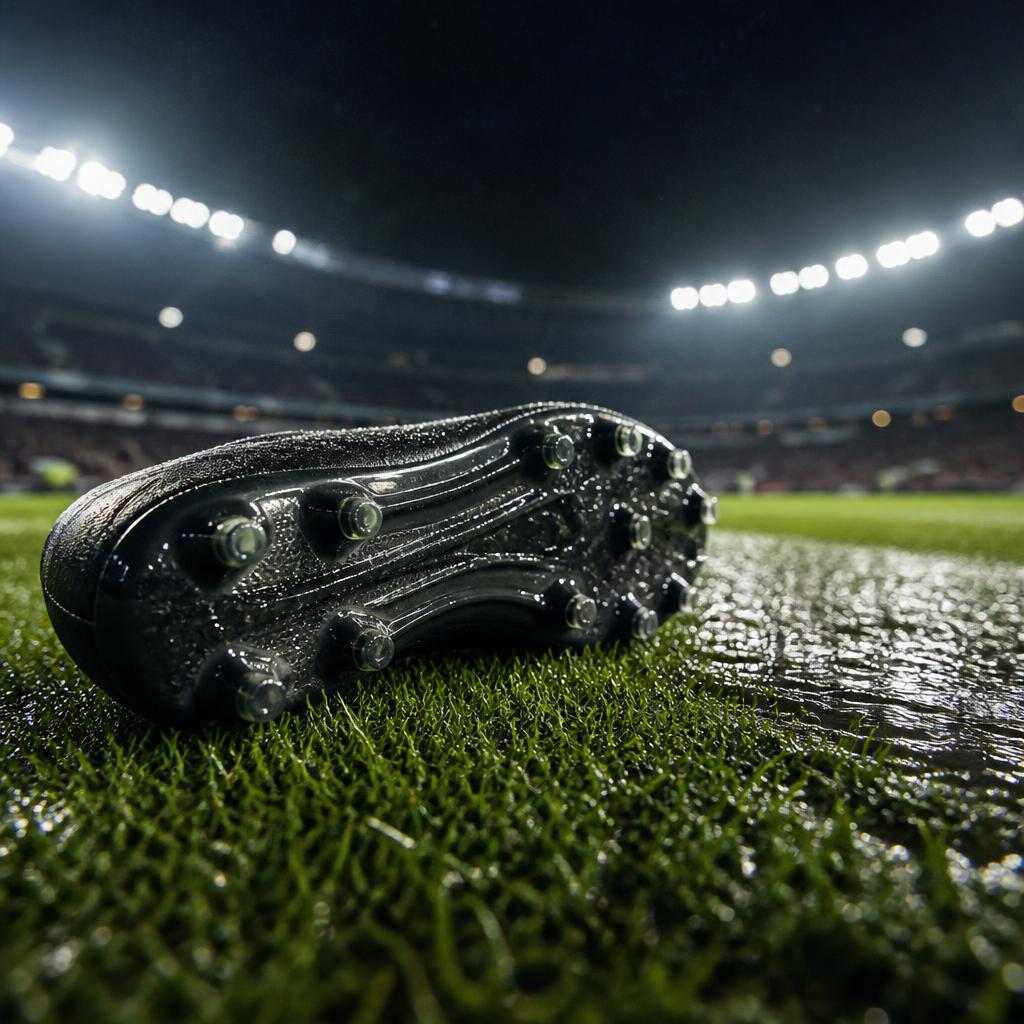
There is no universal number of months for a soccer cleat. Useful life depends on the surface, schedule, player growth, care and the condition of the parts that keep the foot secure.
01 / Inspect the outsole first
Look for studs that are visibly worn, cracked, loose or changing shape. Compare left and right shoes and notice whether one area is wearing much faster than the other. A soleplate that is separating from the upper or no longer feels stable deserves attention before the next demanding session. The exact threshold depends on construction and manufacturer guidance.
Surface matters. A cleat used several times a week on abrasive artificial grass may show a different pattern from one used occasionally on damp natural grass. Do not judge condition by the calendar alone. Photographing the outsole at the start of a season can give a family a useful visual comparison without pretending to create a laboratory measurement.
02 / Listen to fit complaints
Children may outgrow a cleat before it looks worn. Repeated toe pressure, numbness, heel rubbing or a player suddenly avoiding cuts can signal that the fit no longer works. Ask the player to describe what changed and compare both feet in the socks they use. A growing foot is a real replacement reason even when the upper looks nearly new.
The opposite problem also matters: an upper that has stretched or a heel counter that has softened can let the foot move. Tightening laces may mask the issue for a short time, but it should not be a permanent solution to a shoe that no longer holds securely. If the player has ongoing pain or a prior foot concern, consult an appropriate clinician.
03 / Separate dirt from damage
Mud, dried infill and odor can make a serviceable cleat look finished. Follow the care directions, brush off loose material and allow the pair to dry naturally before inspecting again. Avoid using heat that could damage adhesives or materials. A clean, dry upper makes cracks, loose stitching and separation easier to see.
A cosmetic scuff is not automatically a safety or value problem. A sharp exposed edge, broken stud or sole separation is more important than color. Keep notes about when the issue appeared and where the cleat is used. Those details help parents decide whether to replace, request a repair if offered, or retire the pair rather than waiting for a failure during a game.
04 / Plan the replacement
Replacement cost is easier to manage when it is anticipated. Check the pair before the season, before tournaments and after a stretch of heavy training. If a child is growing rapidly, avoid buying far ahead unless the store's policy and the fit timing make that sensible. Keep the receipt and confirm whether the footwear can be returned after indoor testing.
A new pair should still pass the same surface, fit and movement checks as the old one. A replacement is not automatically an upgrade, and a more expensive model is not automatically longer lasting. Choose the pair that suits the player's current field and body, then care for it from the first session.
05 / Build a small inspection habit
The easiest time to inspect cleats is before a problem becomes urgent. Add a two-minute check to the end of a weekly gear reset. Look at the studs from the side, press gently around the soleplate, check the heel lining and ask whether the player noticed a new hot spot. Photographing the outsole occasionally can help a family compare wear without relying on memory, especially during a busy tournament season. Invite the player to do the first inspection so replacement becomes part of owning equipment, not a surprise announcement from a parent.
Do not confuse a cosmetic mark with a structural failure, but do not dismiss a structural change as dirt. Loose stitching, exposed material, a cracked stud or separation between upper and sole deserves attention. If the player is changing their stride to protect a foot, that is meaningful even when the shoe looks presentable. Timely replacement can be simpler than trying to rescue a pair after it fails on a game day. Keep damaged cleats out of a match rotation until the issue has been assessed; a clean appearance does not restore a loose stud or compromised sole.
Replace when fit, structure or surface-appropriate traction can no longer be trusted—not simply because a new colorway arrived.