DIRECTION
Where does the ball go after you receive it?

A player's first touch sets up everything that comes next. Build control, awareness, and confidence by learning how to receive the ball with purpose.
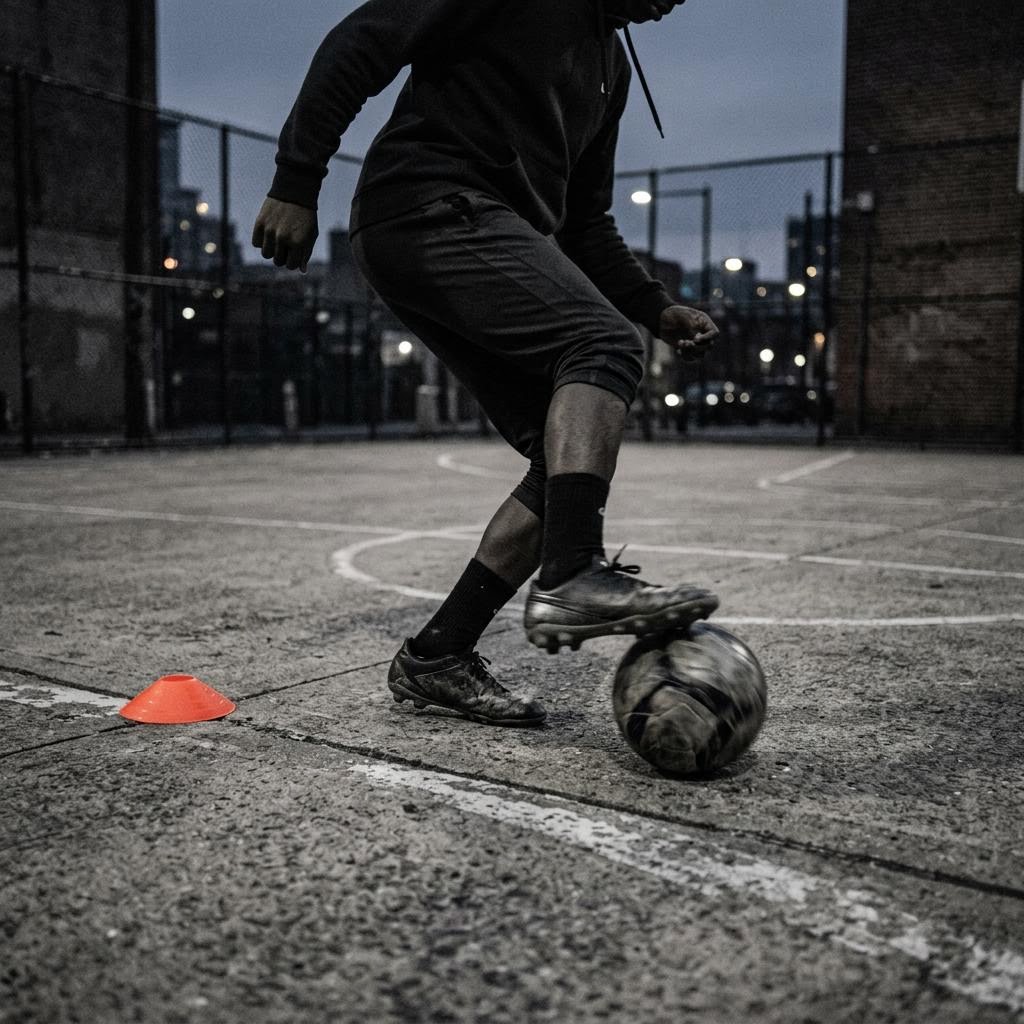
A good first touch is more than simply stopping the ball.
It can create space, protect possession, change the angle of the next action, and give a player more time to make a decision.
Four ways to think about a useful first touch. Principles, not rigid rules.
Where does the ball go after you receive it?
Can your touch move the ball away from pressure?
Can you control the ball with different parts of the foot and body?
Does your first touch set up the pass, dribble, turn, or shot that comes next?
When there is room, a larger touch can help a player move forward.
When pressure is close, the touch may need to be tighter and more controlled.
A touch into space can help a player play forward quickly.
Control, awareness, and protecting the ball become especially important.
There is no single correct touch for every moment. Read the space, pressure, and next action.
One way to move from familiar repetitions toward more game-like situations. Adapt the steps to the player and the session.
Receive and control the ball with limited movement.
Receive while moving toward or away from the ball.
Work on receiving passes from different directions.
Add another player and introduce passing decisions.
Add a passive or active defender.
Add movement, scanning, decisions, and realistic game situations.
Pick a receiving action, give it a purpose, then change the space, movement, or pressure when it makes sense.
Use a wall or rebound surface to receive repeated passes.
Receive, control, and return the ball with a simple rhythm.
Move toward the ball, receive it, and take the next touch into space.
Practice receiving while preparing the body for the next action.
Create movement before receiving the ball.
Add a partner or defender to introduce pressure.
The goal is not to make every touch look perfect. Learn to control the ball while thinking about what you want to do next.
Comfort receiving the ball in different situations takes a lot of practice. Focus on consistency and decision-making rather than demanding perfection.
Players can become so focused on the ball that they miss what is happening around them.
Not every first touch needs to stop the ball completely.
A touch that ignores pressure can make the next action harder.
Players benefit from becoming comfortable receiving the ball in different ways.
The first touch should be connected to what happens next.
A player who knows what is around them has more information before receiving the ball. When the game situation allows it, look around before the pass arrives. Then use that information to choose where the first touch goes.
Different areas of the field ask different questions. These are possibilities, not fixed instructions for every player.
Find the next pass before pressure closes in. See how to receive and turn in crowded central areas.
READ GUIDE 02 / PLAYER ROLETake the pass along the line or inside. Explore the touch that sets up space and a defender.
READ GUIDE 03 / PLAYER ROLEReceive with a defender close, then decide: lay it off, turn, or attack the next space.
READ GUIDE 04 / PLAYER ROLEStay aware of the press and your outlets. Learn to take a first touch that keeps passing options open.
READ GUIDE 05 / PLAYER ROLEUse the sideline without getting trapped. Find a touch for the overlap, inside pass, or reset.
READ GUIDE 06 / PLAYER ROLEReceive with your feet, read the press, and set up a useful next distribution.
READ GUIDEA suitable open space can be enough to work on basic ball familiarity. Start with an activity that fits the room, the surface, and the player.
Choose a safe, appropriate space and follow any household, facility, or team rules.
A player does not need a large collection of equipment to work on first touch. A ball, a suitable place to play, and a clear focus are a starting point.
EXPLORE TRAINING GEARFurther reading as it is published. Planned guides are marked coming soon.
Give first-touch training a purpose. Instead of collecting touches, pay attention to the skill, the decision, and what the ball makes possible next.
It is the first contact a player makes when receiving the ball. That touch can stop it, move it into space, or set up a pass, turn, dribble, or shot.
It connects receiving the ball to what happens next. A purposeful touch can help a player find space, protect possession, or make their next action easier.
Practice receiving from different directions and with different surfaces. Start without pressure, then add movement, a partner, and decisions as the exercise becomes comfortable.
Wall receiving, two-touch wall work, moving receives, and partner passes are useful starting points. Choose a version that fits the player, the space, and what they want to practice.
Yes, in a suitable space. Short receiving exercises, wall passes where allowed, and controlled touches with a ball can help players work on familiarity between team sessions.
There is no fixed timeline. Players develop at different rates, and comfort receiving the ball in a game takes time and varied practice. Focus on purposeful repetitions and decisions, not a deadline.
First touch is one part of the game. Keep building the skills that connect everything together.
EXPLORE TRAIN