SLEEP
Give your body time to recover between sessions.

Recovery is part of the routine. Explore practical gear, habits, and resources that can help players take care of themselves between sessions.
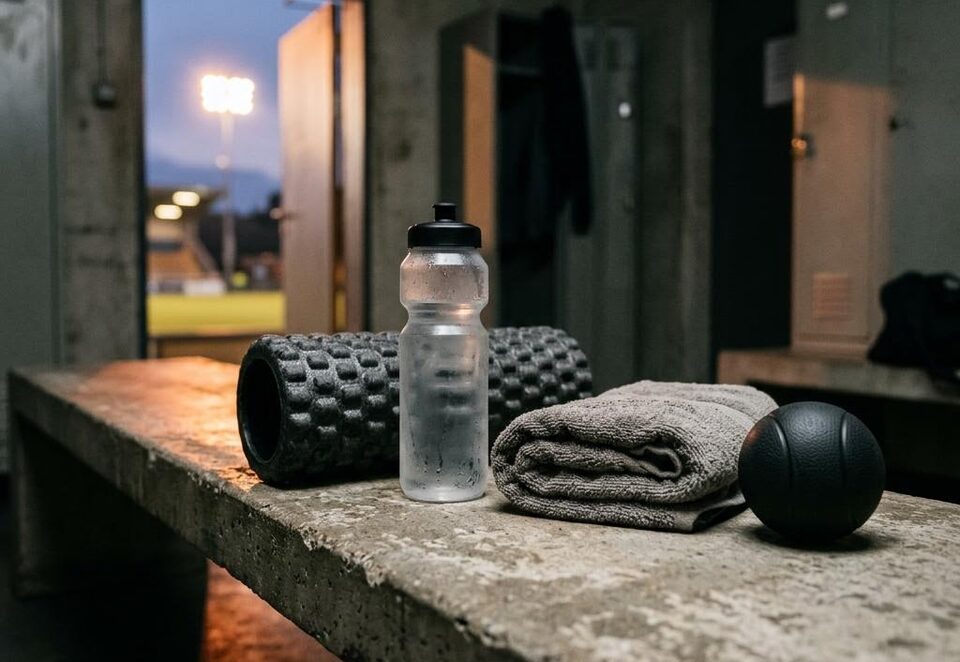
Recovery does not have to mean buying a room full of equipment.
For most players, the basics come first: rest, hydration, nutrition, sleep, and giving the body time to recover between demanding sessions.
Give your body time to recover between sessions.
Replace fluids throughout the day and around activity.
Eat regular meals and snacks that support an active schedule.
Easy movement can be part of a player's normal recovery routine.
Not every day needs to be a hard training day.
A practical way to think about soccer recovery gear: start with the moment in your routine, not a product list.
Gear commonly used for stretching and mobility routines.
Simple recovery products players may use after activity.
Bottles and hydration-related gear for training and match days.
Practical items that can help players transition from the field to the rest of their day.
Gear and organization ideas for players managing multiple games over a weekend.
These are ways to think about your routine, not a list of things every player needs to buy.
Only current, verified product listings appear here. Start with your routine before deciding whether any tool belongs in it.
No verified recovery picks are available yet. We review exact variants and images before listing a product; purchase links also need a separately verified Amazon destination. Routine basics come before any product. As an Amazon Associate I earn from qualifying purchases.
Six useful questions to ask before bringing another piece of gear into the routine.
Gear should support an existing soccer recovery routine, not replace the basics: rest, hydration, regular meals, and sleep.
Players do not need every recovery product available. Start with something that solves a real need in your routine.
Portable, easy-to-use gear can be more practical when players train frequently or travel for tournaments.
A player training several times per week may use certain tools more often than a player who trains less frequently.
Recovery gear should fit realistically into a player's room, car, training bag, or tournament setup.
Understand how a product is intended to be used rather than buying based on marketing claims alone.
Different weeks ask for different kinds of planning. No specific recovery product is necessary for every player.
For players with a consistent weekly training schedule.
For players managing multiple games and travel.
For players balancing frequent practices, matches, and other activities.
The best recovery setup is one you will actually use consistently.
Look for practical gear that fits the player's schedule instead of buying every product marketed as a recovery essential.
A practical checklist, not a requirement to pack everything. Bring what makes sense for the day.
PACK FOR THE DAY / What a player needs depends on the length of the day, weather, number of games, team requirements, and personal routine.
Normal post-training fatigue and soreness are different from an injury.
Recovery gear should not be presented as a substitute for professional medical care.
If a player has significant pain, an injury, or symptoms that are concerning or persistent, a parent or guardian should consider getting guidance from an appropriate healthcare professional.
Further reading for choices that deserve a closer look. Only published guides are linked.
We look at recovery gear from a practical perspective: what it is designed to do, how easy it is to use, how portable it is, and whether it makes sense for a player's actual routine.
Published Recovery stories and guides, newest first.
Useful starting points. Every player’s routine is different.
Start with the routine, not a shopping list. Rest, fluids, regular meals, and sleep come first. Add a tool only if it fits something the player already does or genuinely wants to do.
Some players include a foam roller in their normal mobility routine. It is optional, and how useful it feels depends on the player and whether they will actually use it. It is not a substitute for rest or medical care.
A foam roller covers a broader area; a massage ball is smaller and more targeted. Consider how each is intended to be used, the space available, and what fits the player’s routine.
A water bottle, change of clothes, comfortable layers, a towel, and personal essentials are a practical starting point. Add familiar gear only if it suits the schedule, weather, and team requirements.
No. Many players can start with basic habits and no additional equipment. Any purchase should have a clear place in the player’s real routine.
Persistent, severe, or concerning pain should be discussed with an appropriate healthcare professional. Do not rely on recovery products to assess or address a possible injury.
Build a recovery routine that fits the way you train, play, and travel.
EXPLORE GEAR LAB