
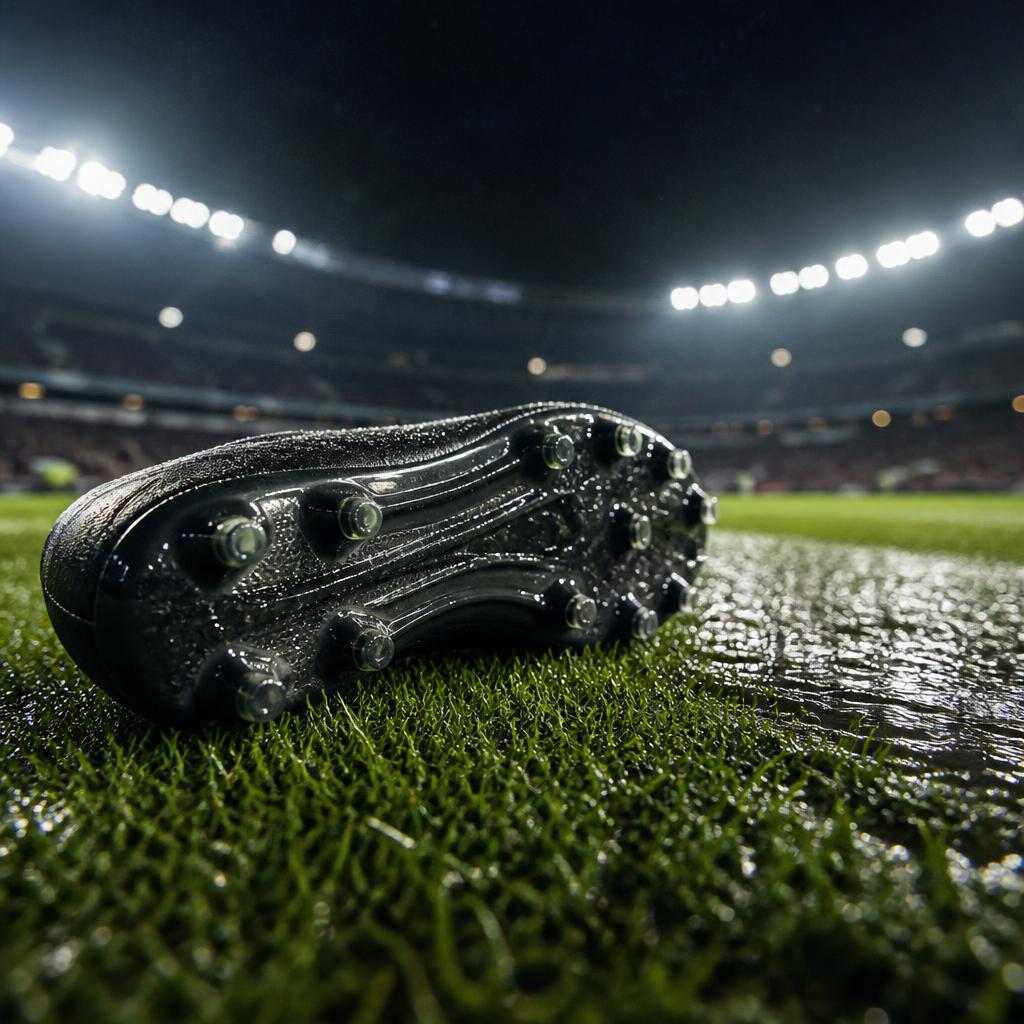
Artificial grass can make choosing soccer cleats more complicated than simply looking for an AG label.
Different fields can vary in construction, surface feel, age, infill and maintenance. Your player's schedule, facility rules and the manufacturer's recommendations also matter.
The good news is that you don't need to overcomplicate the decision. Start with the field, then work through rules, outsole, fit, comfort and budget.
Start here
- 01
IDENTIFY THE FIELD
Find out which synthetic surface your player actually uses.
- 02
CHECK THE RULES
Ask which outsole types the venue or club permits.
- 03
CHECK THE CLEAT'S OUTSOLE
Read the guidance for the exact model, not just the label.
- 04
CHECK THE FIT
Make sure the player feels secure and comfortable.
- 05
CHECK THE RETURN POLICY
Know what kind of try-on is allowed before buying.
Identify the Field
“Artificial grass” can describe different synthetic playing surfaces. Ask the facility what the player will actually use: a full-size soccer field, short-pile turf or another type of surface. You do not need a technical breakdown—just enough detail to shop for the right kind of outsole.
Find out whether the surface is used for training, games or both. If the player regularly moves between venues, note where and how often they play. That schedule is a more useful starting point than a cleat label by itself.
- What type of surface is it?
- Is it a full-size soccer field or short-pile turf?
- Is there infill?
- Does the facility have a footwear policy?
- Is this where the player trains, competes, or both?
Check the Facility Rules
The facility, club, league or tournament may decide which footwear is permitted. Ask before you buy, especially if the player uses more than one venue. A quick check can save a family from buying a pair that cannot be worn where it is needed.
Understand the Outsole
FG generally refers to firm-ground outsoles, AG to artificial-grass outsoles, and turf shoes to a different kind of shorter synthetic surface. These labels are a starting point, not a complete recommendation.
Once you know the field, read the manufacturer's description for the exact model you are considering. Outsole recommendations can vary by model, so do not assume every pair carrying the same label is interchangeable.
Get the Fit Right
Try both cleats on with soccer socks. The heel should feel secure, the foot should not slide excessively, and the toes need room to move. Check for painful pressure points and ask whether the player can move comfortably.
Don't choose a cleat solely because it is popular or looks good. A poor fit can outweigh the advantages of the outsole or technology. Cleats should feel secure without being painfully tight; there is no single measurement that works for every player and shoe.
- Secure heel
- Foot stays centered
- Room for toes
- No painful pressure points
- Comfortable movement
- Secure, not painfully tight
Pay Attention to Comfort and Traction
During a careful try-on, have the player walk, jog, stop and make controlled changes of direction on a clean surface. Ask whether the foot feels secure, whether there are pressure points, and whether the shoe feels comfortable for movement.
The player can also notice whether the outsole feels appropriate for the field. Do not test a new pair on the field until you know whether doing so could affect the retailer's return policy.
Think About Your Player's Schedule
The most useful choice depends partly on how often the player uses artificial grass and what other fields appear in the schedule. A second pair may help when the schedule regularly changes surfaces, but not every family needs multiple pairs.
Mostly artificial grass
A dedicated option for that surface may make sense if it is permitted and recommended for the model.
Grass and artificial grass
Consider whether one permitted pair covers the schedule or a second pair would be useful.
Changes facilities often
Check each venue's footwear rules before assuming the usual pair is allowed.
Consider Your Budget
Balance the price with how often the player plays, how quickly they are growing, how often cleats may need replacing, and whether the schedule calls for one pair or more. Include return flexibility and durability in the decision.
The most expensive cleat isn't automatically the best choice for every player. Focus on what fits the field, player and season instead of paying more for features the player does not need.
Before You Check Out
Take one last look at the field, the footwear rules, the outsole recommendation and the fit. Then make sure the return policy and the expected use make sense for your family.
- I know what surface the player will use.
- I checked the facility or club's footwear rules.
- I checked the manufacturer's outsole recommendation.
- The cleat fits comfortably.
- There are no obvious pressure points.
- I understand the return policy.
- The cleat makes sense for the player's schedule.
- I considered how quickly the player may outgrow it.
Player view / Parent view
Player view
The player cares about how the cleat feels.
- Comfort
- Fit
- Movement
- Touch
- Confidence
Parent view
The parent has to make the purchase work for the season.
- Price
- Durability
- Schedule
- Field rules
- Growth
- Return policy
Put both perspectives together before making the purchase.
5 common artificial-grass cleat mistakes
- 01
Buying by label alone
An FG or AG tag cannot answer every question about the exact cleat and field.
- 02
Ignoring the venue's rules
A great fit is not useful if the cleat is not allowed where the player plays.
- 03
Assuming every artificial field is the same
Ask what surface is used at the actual training and game venues.
- 04
Choosing style over fit
A popular colorway does not make up for heel slip or painful pressure.
- 05
Skipping the return policy
Know the try-on terms before taking a new pair onto a field.
The bottom line
Choosing cleats for artificial grass doesn't have to be complicated.
Identify the field, check the rules, follow the manufacturer's guidance for the exact outsole, prioritize fit and comfort, and make sure the purchase makes sense for your player's actual schedule.
The goal isn't to find the most expensive or most popular cleat. It's to find a pair that fits the player, the field and the season.