
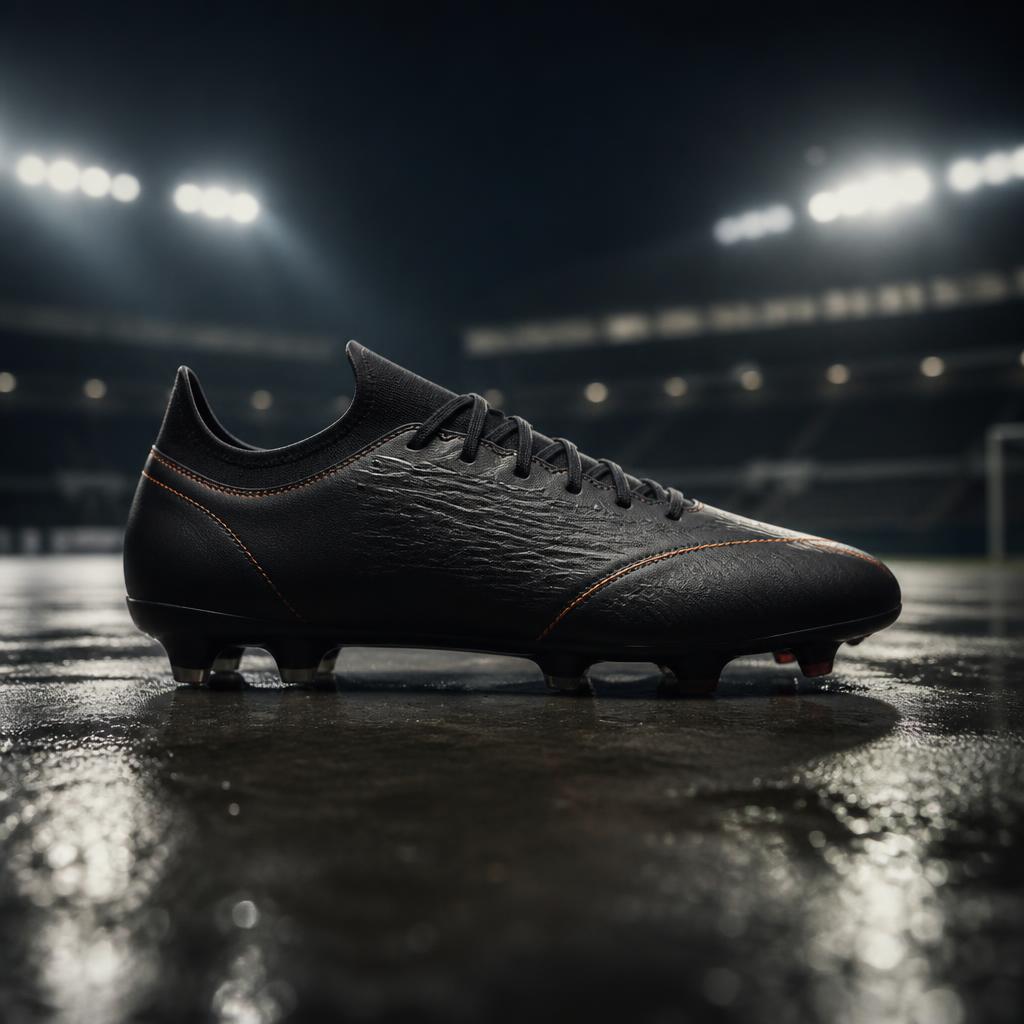
Soccer cleats and turf shoes may look similar, but they interact with the ground differently.
The biggest difference is the outsole. Outdoor cleats use studs designed for specific playing surfaces. Turf shoes typically use many small rubber nubs for short, firm synthetic turf. Indoor soccer shoes are different again.
Start with the surface your player actually uses and the rules at that facility.
Cleats vs turf shoes at a glance
These are typical uses, not rules for every model or venue.
| Footwear | Typical surface | Outsole | Main purpose |
|---|---|---|---|
| Firm-ground cleats | Natural grass | Molded studs | Outdoor grass |
| AG cleats | Artificial grass | Artificial-grass outsole | Synthetic soccer fields |
| Turf shoes | Short, firm synthetic turf | Small rubber nubs | Turf-style surfaces |
| Indoor soccer shoes | Indoor court | Flat, non-marking outsole | Indoor courts |
What Are Soccer Cleats?
Outdoor soccer cleats use studs designed to interact with a particular playing surface. Firm-ground (FG) cleats are generally associated with natural grass, while artificial-grass (AG) cleats are intended for artificial-grass fields. Manufacturers may offer other outsole categories too.
Those labels help narrow the search, but the exact model and field still matter. If you want a closer look at FG and AG, the companion guide below compares them without turning this article into the same discussion.
FG or AG? Read the full outsole comparisonWhat Are Turf Shoes?
Turf shoes generally have many small rubber nubs rather than the larger studs on outdoor cleats. They are typically designed for shorter, firmer synthetic turf surfaces.
A field described as “turf” is not always the same kind of surface from one venue to the next. Ask what the venue means by turf and which footwear it permits before assuming a turf shoe is the right match.
What About Indoor Soccer Shoes?
Indoor soccer shoes generally have flat, non-marking outsoles for indoor courts and other hard playing surfaces. They are a separate category from turf shoes with rubber nubs.
Not every indoor venue uses the same floor or has the same footwear policy. Check its rules rather than assuming any shoe called “indoor” or “turf” will be accepted.
Which One Should Your Player Use?
Match the footwear category to the field first. These are starting points, not permission to wear a particular outsole at every venue.
NATURAL GRASS
Start with the cleat category recommended for that grass field and the exact model.
ARTIFICIAL GRASS
Confirm the venue's rules and the recommendation for the outsole you're considering.
SHORT SYNTHETIC TURF
Turf shoes may be the relevant category if the facility permits them.
INDOOR COURT
Indoor soccer shoes are generally the relevant category.
NOT SURE?
Ask the coach or facility what surface and footwear they expect before buying.
Can You Use Turf Shoes Instead of Cleats?
Sometimes—but it depends on the surface and the rules. Turf shoes may make sense for a short, firm turf-style surface when the venue permits them. They are not a universal replacement for outdoor cleats.
If the player regularly plays on natural grass or a field requiring a specific cleat category, do not assume turf shoes can take that pair's place. Find out what is allowed before you buy.
How Should Turf Shoes Feel?
Look for a secure heel, enough room for the toes, no painful pressure points and comfortable contact with the ground. Have the player walk, stop and make controlled changes of direction indoors if the retailer allows it. Movement should feel predictable, not awkward or painful.
Read the return policy before wearing a new pair outside. An indoor try-on can tell you a lot without making the shoes ineligible for return.
One Pair or Two?
A player does not automatically need both turf shoes and outdoor cleats. Start with the field used most often. Then use the questions below to decide whether a second type solves a real, recurring need.
If the other surface comes up only occasionally and an allowed pair already works, a second purchase may not be necessary. Regularly switching between clearly different surfaces can make two pairs practical, but the schedule—not a shopping list—should drive that choice.
- Where does the player spend most of their time?
- What surfaces are used for games?
- What surfaces are used for training?
- What does the club or facility allow?
- How often would a second type actually be used?
Player View / Parent View
Player view
What feels right on the surface?
- Comfort
- Fit
- Movement
- Touch
- Feel
Parent view
What makes sense for the schedule?
- Surface
- Facility rules
- Price
- Frequency of use
- Durability
- Return policy
The right pair is the one that matches the surface, the rules and the player.
Common Mistakes
- 01
Assuming turf shoes are just smaller cleats
The outsole is made for a different kind of surface.
- 02
Confusing turf shoes with indoor shoes
Rubber nubs and flat court outsoles have different jobs.
- 03
Treating every synthetic field alike
A short turf surface is not the same as every artificial-grass field.
- 04
Shopping by appearance first
Start with the field and fit, not the colorway.
- 05
Missing the footwear rules
A venue may restrict which outsole types can be worn.
Before You Buy
- I know what surface the player will use.
- I know what footwear the facility allows.
- I know whether the shoe is designed for that surface.
- The player has tried the shoe for fit and comfort.
- I understand the return policy.
- The player actually needs this footwear category.
- I know whether this is for training, games or both.
The bottom line
Turf shoes and soccer cleats are not interchangeable just because they look similar.
Cleats are designed around specific outdoor surfaces, while turf shoes generally use smaller rubber nubs for shorter, firmer synthetic turf. Indoor soccer shoes are a separate category again.
Start with the surface, check the facility rules, then choose the footwear that matches the player's actual schedule.